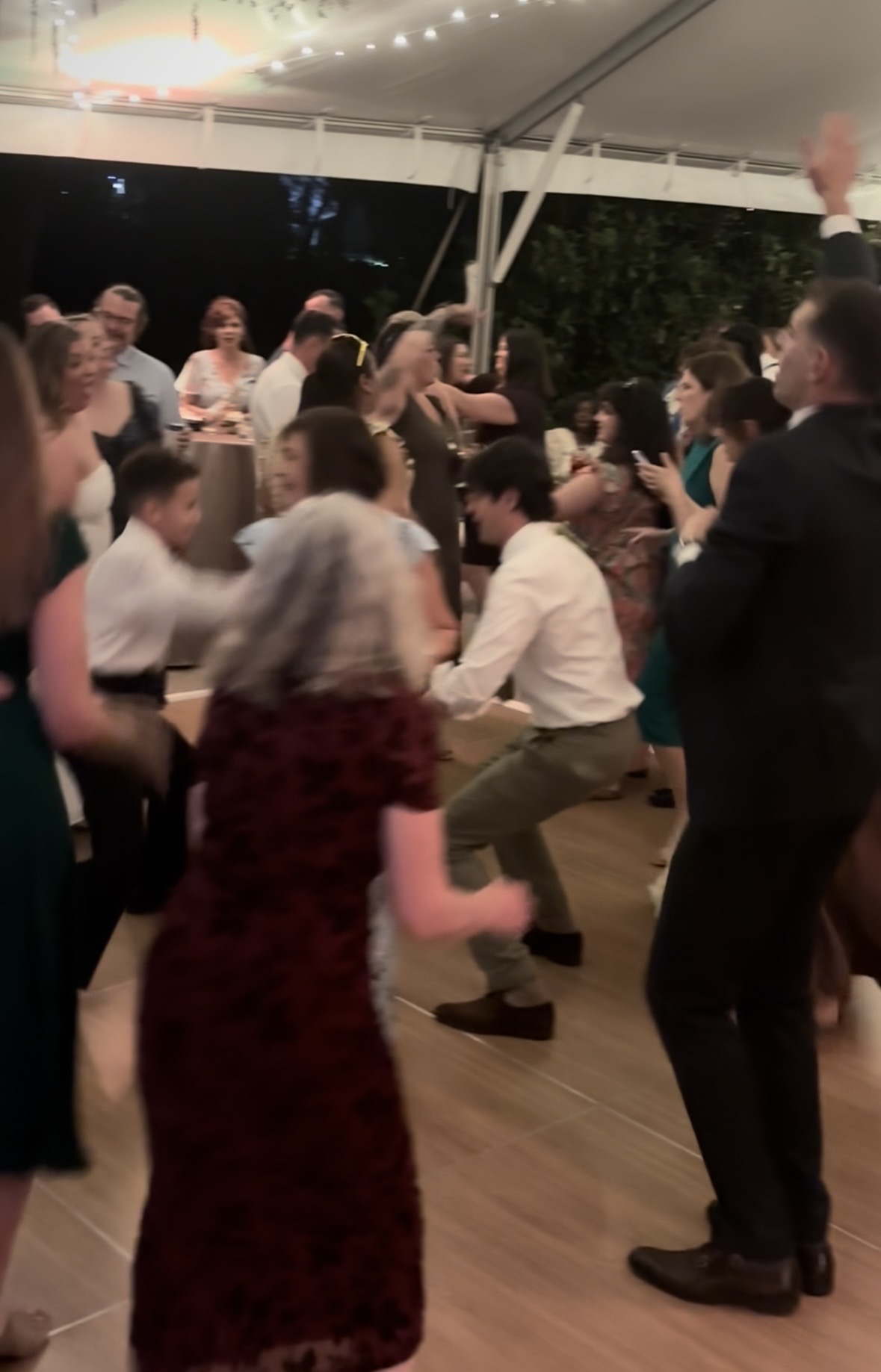
Here's what you're actually paying for when you book a wedding DJ.
1. Timeline Architect
Long before your wedding day, a good DJ is building — and rebuilding — your reception timeline. Grand entrance, first dance, dinner service, toasts, cake cutting, bouquet toss, last song of the night: someone has to sequence all of it, coordinate it with your caterer and photographer, and build in buffer time for the inevitable "we're running 15 minutes behind." That's usually the DJ.
2. Master of Ceremonies
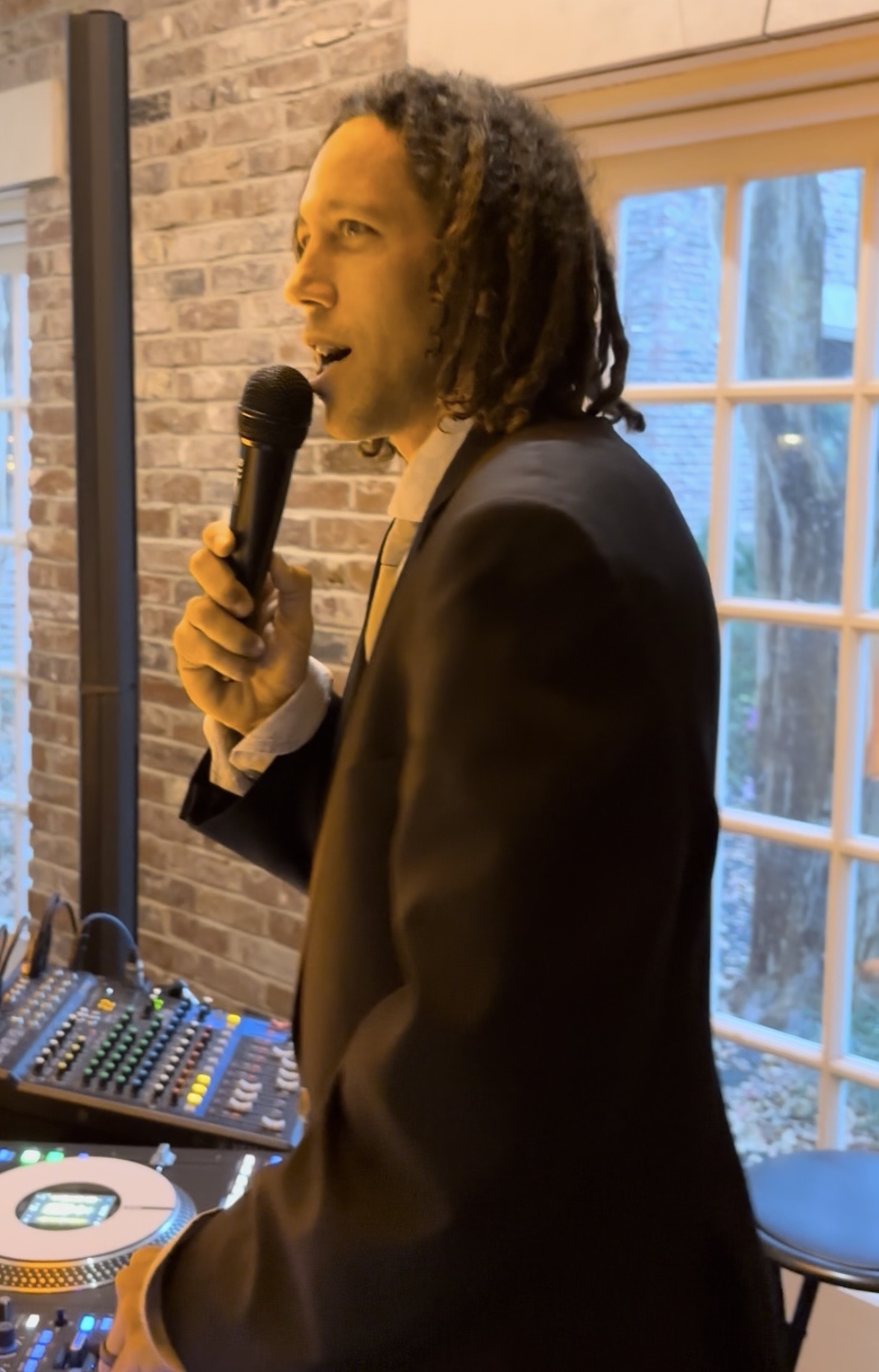
This is the part people underestimate most. Your DJ isn't just cueing songs — they're often the one making announcements, wrangling the bridal party for introductions, keeping toasts from running long, and making sure the room knows what's happening next without anyone feeling rushed or confused. A great MC makes the whole night feel effortless. That effortlessness is the job.
3. Sound Engineer
Weddings have a lot of moving audio parts: ceremony mics, cocktail hour ambiance, dinner background music, dance floor volume, a wireless mic for grandpa's toast. A DJ is managing sound levels in real time across all of it — and adjusting on the fly for room acoustics, guest count, and whatever a venue's questionable wiring decides to throw at them that day.
4. Crowd Reader
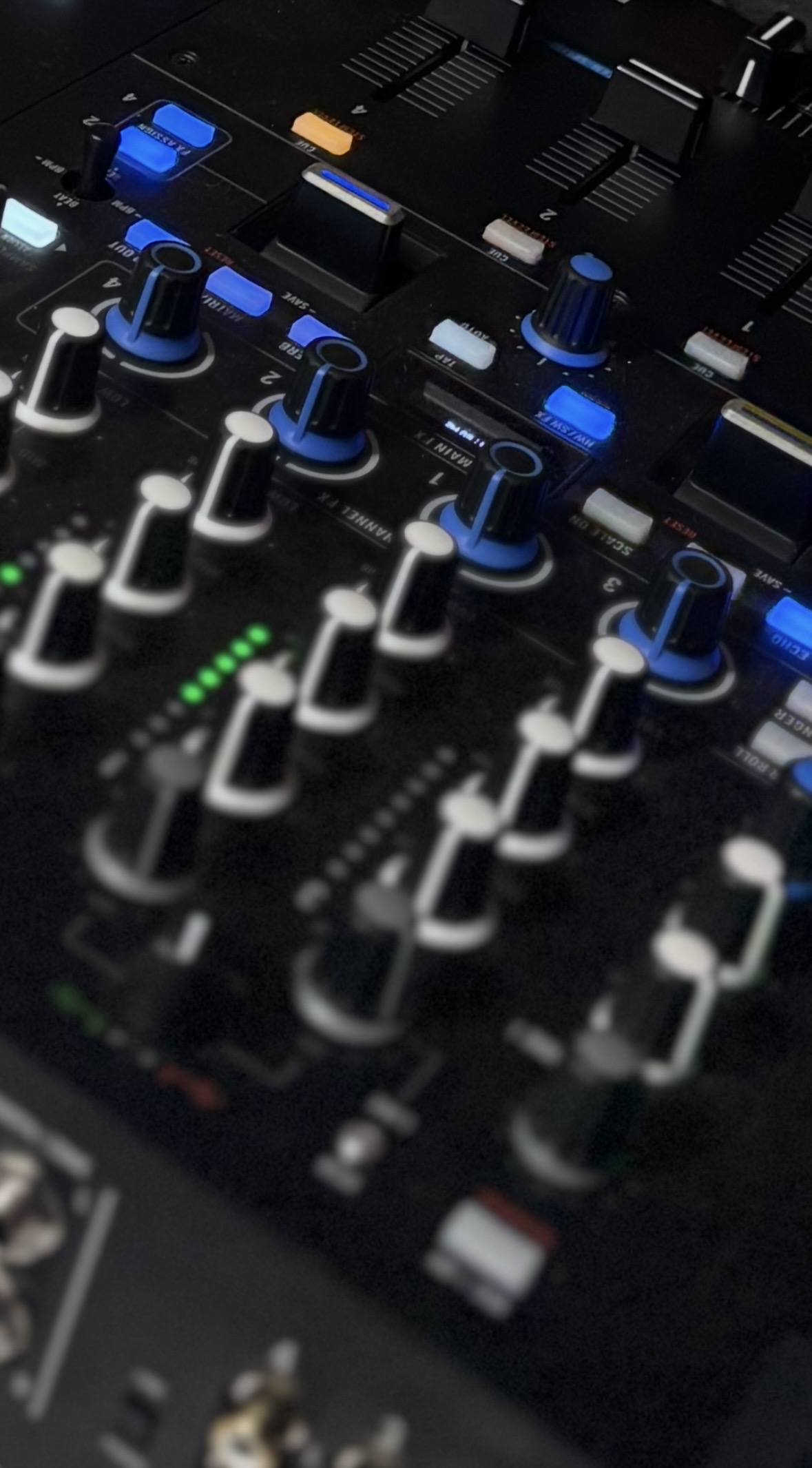
Here's the part that separates a good DJ from a great one: knowing what to play and when. Reading a room — sensing when the energy needs a boost, when it's time to slow things down, when to save the floor-fillers for later instead of blowing your load in the first twenty minutes — isn't something you can fully plan in advance. It's a skill built over hundreds of events, not a setting on a mixer.
5. Problem Solver, Quietly
The centerpiece falls over during the toast. The best man loses the rings for a panicked five minutes. It starts raining on an outdoor ceremony. A good DJ is often the calm, adaptable presence handling the small fires in the background so you never even know they happened — because you were too busy having the best night of your life to notice.
The Bottom Line
A wedding DJ's actual job description is closer to reception director than "person with a laptop." Music is the obvious part. The planning, the pacing, the mic work, and the on-the-fly problem-solving are the parts nobody sees — until they're missing.
Ready to talk through your date and venue?
Check My Date →